Showing posts with label mix media cards. Show all posts

Friday, June 27, 2025

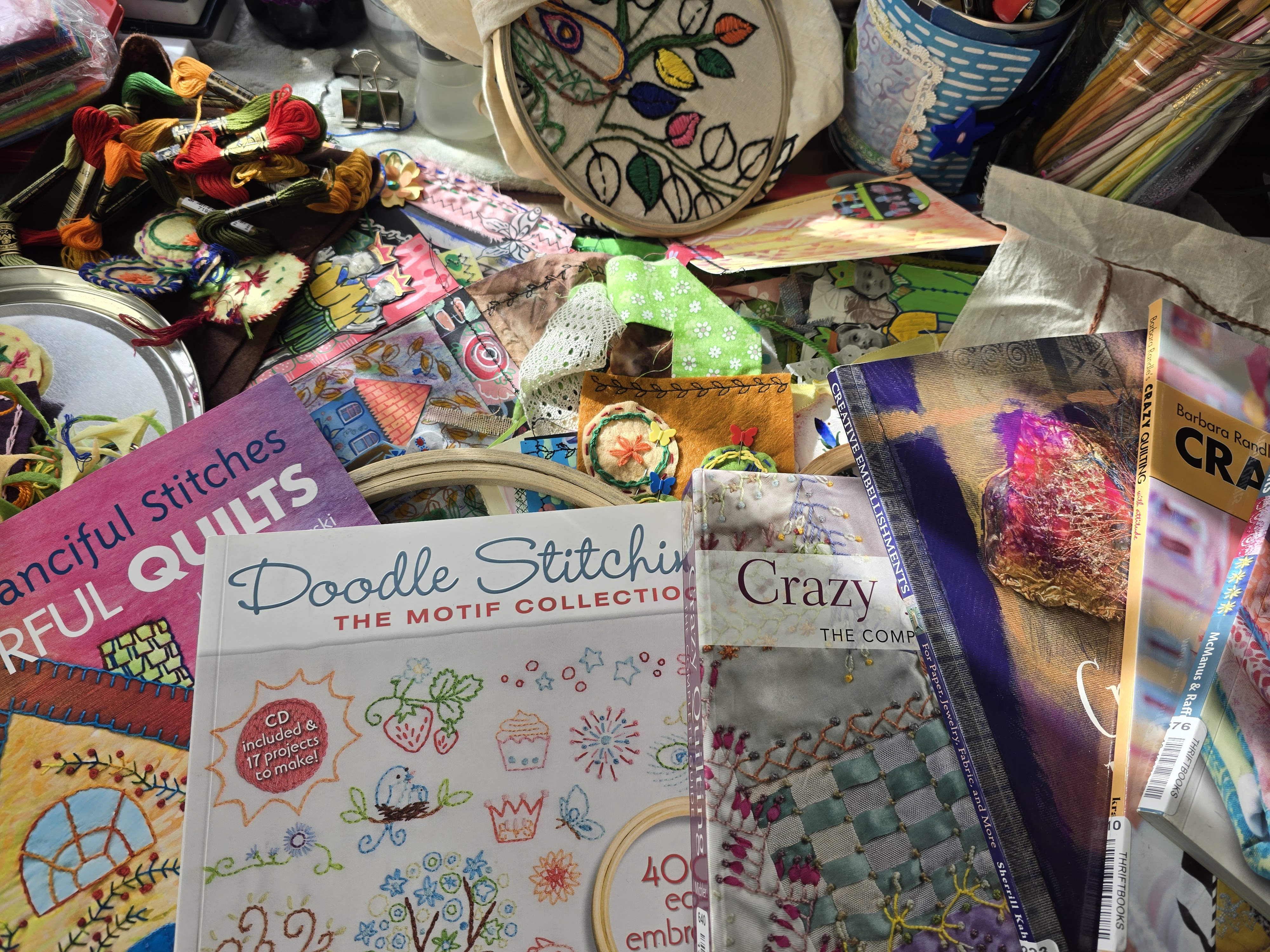
🧵 Stitching in Art Journal Pages: Adding Text and Words to Your Art


🧵 Stitching in Art Journal Pages: Adding Text and Words to Your Art

When words meet thread, something magical happens.

Incorporating stitching into your art journal isn't just about texture—it's about storytelling. It’s a beautiful way to slow down, reflect, and give your pages a deeply personal, handmade touch. And when you use stitches to add words or text, your art becomes even more expressive.

Why Stitch Words Into Your Art Journal?

Most of us are used to writing or painting words on our pages. But stitching? It adds another layer—both visually and emotionally. Each letter, formed stitch by stitch, invites mindfulness. It creates intimacy and intention.

Plus, it's tactile! You can feel the texture. See the shadows. Watch thread weave meaning into your background.

What You’ll Need:

You don’t need fancy supplies to start stitching in your art journal. Just a few simple tools:

  • Needle (sharp enough for paper or fabric)

  • Embroidery thread or fine yarn

  • Awl or push pin (to pre-punch holes if working on thick paper)

  • Pencil (for sketching your word)

  • Fabric scraps (optional, for added texture)

  • Washi tape or fabric glue (to secure threads on the back)

Tip: Use lightweight paper or fabric layers if you're worried about tearing your journal pages.

How to Add Stitched Words to Your Pages

  1. Choose Your Word
    Pick a word that resonates with your page’s theme or your mood—like “breathe,” “hope,” or “grow.” You can also use short phrases or even stitched quotes!

  2. Sketch it Out
    Lightly draw your word where you want it to appear on the page. Use cursive or block letters—whatever matches your style.

  3. Pre-Punch the Holes
    Use an awl or push pin to make small holes along the lines of your letters. This makes stitching easier and keeps the paper from tearing.

  4. Start Stitching!
    Thread your needle and start sewing through the holes. A simple backstitch works great for most words. Don’t worry about perfection—it’s all about expression.

  5. Secure the Thread
    When finished, tape or glue down the thread ends on the back of the page so they stay put.

Ideas for Using Stitched Text

  • Highlight a quote that inspires you

  • Add a single word as the focal point

  • Stitch over fabric scraps for layered effects

  • Use thread color to match your theme or mood

A Slower, More Meaningful Process

Stitching words forces you to slow down, and that’s a good thing. It becomes a meditative practice. One letter at a time, your message unfolds—not just for the viewer, but for yourself.

You don’t need to be an expert in embroidery or sewing. Even the most basic stitches bring charm and character to your work. And over time, your confidence (and stitch vocabulary) will grow.

Monday, June 23, 2025

Common Stitch Types for Art Journals and the Best Fabrics to Use


🧵 Common Stitch Types for Art Journals and the Best Fabrics to Use

If you’ve ever wanted to bring more texture, story, and soul into your art journal, fabric and hand stitching can be a beautiful way to do it. Whether you’re creating a fabric journal from scratch or adding stitched elements to your mixed media pages, understanding a few basic stitch types and fabric choices can open up a whole new world of creative expression.

✨ Why Add Stitching to Your Art Journal?

Stitching adds dimension, texture, and a deeply personal touch to any journal page. It slows you down (in the best way), encourages mindful making, and allows you to literally "draw with thread." Each stitch becomes a mark of time, thought, and story.


🧵 Common Hand Stitch Types for Art Journals

You don’t need to know hundreds of techniques — just a few versatile stitches can get you started and go a long way.

1. Running Stitch

A simple up-and-down stitch that creates a dashed line. It’s great for outlines, borders, and attaching fabric to paper.

2. Backstitch

Stronger than the running stitch and perfect for writing with thread, outlining shapes, or stitching on heavier fabric.

3. Straight Stitch

One of the most versatile stitches — can be scattered for texture, grouped in patterns, or used as filler.

4. French Knots

Beautiful little dots that add texture and dimension. Ideal for creating tiny florals, decorative details, or visual accents.

5. Blanket Stitch

A classic edge stitch that works wonderfully to secure fabric around the edges of a journal page or patch.

6. Chain Stitch

Looks like a little chain and is perfect for borders, vines, or whimsical lines.


🧵 Best Fabrics to Use in Art Journals

Choosing the right fabric makes a big difference when you’re combining textiles and paper.

🌿 Muslin or Calico

Affordable, easy to stitch through, and perfect for dyeing or painting. A great base fabric for journaling.

🌾 Linen

Has a beautiful texture and natural look. Slightly more open weave, so great for hand stitching.

👕 Upcycled Cotton

Old shirts, pillowcases, or baby clothes — cotton is soft, easy to sew, and adds a personal touch to your journal.

🧣 Silk or Organza

For transparent, ethereal layers. Use with care — they can be delicate, but they add stunning effects.

🧼 Tea-Stained or Dyed Fabrics

Pre-treat your fabrics with natural dyes, inks, or tea for a vintage, earthy feel that adds instant depth to your pages.


🧵 Tips for Stitching in Art Journals

  • Use embroidery thread or perle cotton for bold stitches and visible lines.

  • Pre-punch holes if stitching directly on paper to avoid tears.

  • Layer fabric over watercolor or collage for mixed media magic.

  • Work on loose pages before binding if you're planning a thick stitched design.


✂️ Stitch Your Story

Every stitch tells a story — of memory, mood, or meaning. As you play with thread and fabric in your journal, remember: there are no rules. Whether you're slow stitching as meditation or using it to hold scraps and secrets together, your fabric journal becomes a living, tactile archive of your creative journey.

What stitch will you try first?


Friday, June 20, 2025

Beautiful Stitching Techniques for Art Journals


 Stitching in Art Journal Pages

Stitching is a popular and expressive technique in art journaling, adding tactile texture, visual depth, and personal meaning to your pages. It can be done by hand or with a sewing machine, and offers a wide range of creative possibilities.

Benefits and Effects of Stitching in Art Journals

·         Adds texture and dimension, transforming flat pages into tactile works of art.

·         Creates a sense of connection-both between materials and between your thoughts and the physical page.

·         The process can be meditative, encouraging mindfulness and intentionality with each stitch.

·         Stitches can be symbolic, representing emotions, moments, or connections within your journal spread.

Common Stitch Types for Art Journals

Here are some popular stitches and their uses in art journaling.

Stitch Type

Description & Use

Running Stitch

Simple, straight stitches for outlines, borders, or subtle texture

Backstitch

Solid, continuous line for outlines or writing words directly on the page

Cross Stitch

Decorative “X” shapes for patterns or filling areas with color

French Knot

Small, raised knots for accents like flower centers or stars

Blanket Stitch

Looped border for finishing edges or framing sections

Whip Stitch

Twisted, rope-like stitch for attaching elements or joining layers

Chain Stitch

Looped, chain-like line for flowing curves or movement

Satin Stitch

Dense, smooth fill for blocks of color or focal points

Seed Stitch

Scattered, tiny stitches for organic background texture

Abstract Stitch

Freeform, irregular stitches-often with fabric scraps-for expressive effects


Techniques and Tips

·         Hand Stitching vs. Machine Stitching: Both methods are effective. Hand stitching offers more control and intimacy, while machine stitching is faster and can create decorative effects with built-in patterns.

·         Materials: You can stitch directly on paper, fabric, or a combination. Use embroidery thread, topstitch thread, or even regular sewing thread. For heavier embellishments, consider using fabric or interfacing for stability.

·         Layering: Stitching can be used to attach collage elements, fabric patches, or paper strips, adding both structure and visual interest.

·         Edges and Borders: Decorative stitches like zig-zag or blanket stitch can be used to finish edges, frame sections, or create interesting page borders.

·         Binding: You can sew signatures (groups of pages) together or even create fabric-covered art journals using sewing techniques for the covers and spine.

Creative Inspiration

·         Use stitching to attach meaningful mementos, fabric scraps, or textured papers.

·         Experiment with colored threads to create contrast or highlight important areas.

·         Try “slow stitching” as a mindful, calming practice-perfect for on-the-go journaling.

·         Let loose threads, knots, and irregularities become part of the art, adding character and narrative.

Final Thoughts

Stitching in art journals is more than just a decorative technique-it’s a way to infuse your pages with emotion, intention, and a unique tactile quality. Whether you’re outlining, embellishing, or binding, each stitch becomes a mark of your creative journey

Monday, June 9, 2025

What are some tips for packing embroidery supplies for air travel


What are some tips for packing embroidery supplies for air travel

Here are some expert tips for packing embroidery supplies for air travel:


Packing Tips for Embroidery Supplies on Airplanes

Use TSA-approved travel scissors: Choose small scissors under 6 inches like Fiskars folding travel scissors or thread snips with blunt tips, which are less likely to be confiscated at security.


Carry extra needles and use a magnetic needle minder: Pre-thread several needles and keep them secure in a needle case or with a magnetic needle minder to avoid losing them during the flight.


Organize floss and tools in compact containers: Use small hinged tins or thread storage boxes to keep floss, needles, and tools tidy and easy to access in your carry-on.


Prepare your project before travel: Cut fabric to size, transfer patterns, wind thread on bobbins, and stretch fabric in your hoop at home to minimize what you need to bring and simplify stitching on the plane.


Pack a project pouch: An A5-sized pouch can hold a 5-inch hoop, fabric, thread, and tools, keeping everything organized and portable.


Select projects with similar color palettes and only bring the thread you need: This reduces the amount of floss you carry and allows you to switch between projects without overpacking.


Be mindful of airline restrictions: Check airline and TSA rules about scissors and sharp objects before packing. Some travelers carry scissors they are willing to part with if confiscated or use alternative thread cutters.


Use a drawstring bag or scrappy project bag: These provide secure, attractive storage that prevents supplies from spilling in your carry-on.


Consider thread gloss for easier needle threading: Especially useful when wearing a mask on the plane, thread gloss helps tame floss ends for easier threading without needing to put your mask down.


Keep metal items visible and separate: Store scissors, needles, and other metal bits in a clear bag or separate container to ease TSA inspections and avoid delays.


Summary

Pack a compact, well-organized kit with TSA-compliant scissors or snips, extra needles secured with a magnetic minder, pre-prepped fabric and thread, and use small tins or pouches for easy access. Always check airline restrictions beforehand and consider alternatives like thread gloss and thread cutters to streamline your travel embroidery experience. This approach ensures smooth security checks and enjoyable stitching during your flight


TRAVEL EMRODARY KIT DOS AND DON'TS

ane seats or car rides

Don'ts for a Travel Embroidery Kit

Don’t start stitching without a hoop: Stitching without a hoop can lead to uneven tension and puckered fabriC

Don’t bring too many supplies: Avoid overpacking; bring only what you need to save space and reduce frustration

Don’t use blunt or old needles: These can damage fabric and thread, making stitching harder and less enjoyable

Don’t lose your needles: Losing needles while traveling can be stressful and dangerous, so always store them securely and put them back in their case when not in use

Don’t rely on flimsy storage: Avoid using ziplock bags alone as they may not be durable or secure enough; instead, use sturdy project bags or tins

Summary

A well-prepared travel embroidery kit should be compact, organized, and secure, including a small hoop, sharp needles, selected floss, fabric pre-cut and pressed, travel-friendly scissors, and a reliable storage solution. Prepare as much as possible before leaving home to maximize stitching time and minimize hassle. Secure needles carefully to avoid loss or injury, and pack only what you need to keep your kit manageable and enjoyable on the go


What are some alternatives to traditional scissors for travel


Here are some practical alternatives to traditional scissors for travel embroidery and needlework:


Thread snips: Small, spring-loaded thread snips are popular for travel because they are compact and easy to use for quick thread trimming. They often have a blade length short enough to pass TSA screening and are less likely to be confiscated.


Fingernail clippers: Many travelers use fingernail clippers to cut threads or small ties, especially when scissors are not allowed. Clippers without attached files are less likely to be confiscated and can serve as a handy cutting tool.


Small folding scissors: While technically scissors, tiny folding scissors (like Dritz travel scissors) fold to a compact size and are often allowed in carry-on luggage. However, confiscation can be random, so it’s best not to bring expensive or irreplaceable pairs.


Thread cutters worn as pendants: Some thread cutters are designed as pendants or keychains with a small blade inside a protective housing, making them travel-friendly and easy to carry around the neck.


Dental floss containers with built-in cutters: These can be used to snip threads and are generally TSA-friendly since they are not traditional cutting tools.


Using larger tapestry needles as laying tools: For certain tasks like flattening threads, a larger needle can substitute for specialized tools that might not be allowed in carry-on bags.


In summary, thread snips and fingernail clippers are the most common and TSA-friendly alternatives to traditional scissors for travel embroidery. Small folding scissors and pendant-style thread cutters are also options but may carry some risk of confiscation depending on airport security. Packing inexpensive or replaceable cutting tools minimizes loss risk during air travel.

WHAT IS DIFFERENCE BETWEEN SLOW STICHING AND EMRODORY

The difference between slow stitching and embroidery lies primarily in their purpose, approach, and mindset:


Embroidery

Embroidery is the general art or craft of decorating fabric or other materials with needle and thread or yarn, often to create detailed, decorative patterns or images.


It can be done by hand or machine and typically aims for a polished, finished product, often with precise and sometimes complex stitches.


Embroidery is focused on embellishment and can include a wide range of techniques and styles, often emphasizing skill and aesthetics.


Slow Stitching

Slow stitching is a mindful, meditative practice that emphasizes the process of stitching rather than the finished product.


It involves hand stitching in a relaxed, unhurried way, often using simple running stitches or freeform stitches, and embracing imperfections.


Rooted in traditions like Japanese Boro and Sashiko, slow stitching encourages connection to the moment, mindfulness, creativity, and sustainability by using scraps or mending existing fabrics.


The goal is to slow down, enjoy the tactile experience, and find calm and presence through stitching, rather than focusing on perfection or complexity.


Slow stitching is often described as a spiritual or wellness practice, fostering self-awareness and emotional benefits through intentional, slow creativity.


Summary Table

Aspect                                      Embroidery         Slow Stitching

Purpose               Decorative embellishment            Mindful, meditative stitching process

Focus    Finished product and design precision     Process, mindfulness, and imperfection

Techniques          Wide range, often intricate           Simple running stitches, freeform

Tools      Hand or machine needle, varied stitches Mainly hand stitching with simple stitches

Materials             New or chosen fabrics and threads           Often uses scraps, recycled fabrics

Mindset               Skill and aesthetics          Relaxation, presence, creativity

In essence, embroidery is the broader craft of decorative stitching, while slow stitching is a contemporary movement and philosophy that values the mindful, slow, and imperfect act of hand stitching as a form of meditation and creative expression


Happy creating, and don’t forget to let your imagination grow! 🍄✨

Follow me on InstagramFacebookPinterest, and YouTube,

I get asked a lot about where to purchase the supplies I use in my videos and blog posts. I list all the supplies I use at the end of my posts (below) 

Thursday, May 1, 2025

Slow Stitching vs. Embroidery: What’s the Difference?


Slow Stitching vs. Embroidery: What’s the Difference?

In the world of needle and thread, two beautiful techniques often come up in conversation: slow stitching and embroidery. While they may seem similar at first glance—both involve hand sewing and artistic creativity—they serve different purposes and follow different philosophies. If you're curious about what sets these two apart, you're in the right place.

What Is Slow Stitching?

Slow stitching is more than just a technique—it's a mindful, meditative practice. Think of it like the "slow food" movement, but for textiles. Slow stitching isn’t about perfection or following strict patterns. Instead, it emphasizes creativity, mindfulness, and process over product.

Key Features of Slow Stitching:

  • Freeform style: No rules, patterns, or expectations.

  • Mindfulness: Done slowly and intentionally, often for relaxation.

  • Recycled materials: Often uses scraps, old fabric, and vintage textiles.

  • Focus on the journey: It’s about enjoying the act of sewing, not just the final result.

Slow stitching is ideal for those who want to disconnect from fast-paced life and connect with their creativity in a gentle, expressive way.

What Is Embroidery?

Embroidery is a decorative needlework technique that involves stitching designs onto fabric using various stitches, patterns, and colors. It’s been practiced for centuries across cultures and is often seen in traditional garments, home decor, and fine art.

Key Features of Embroidery:

  • Pattern-based: Often follows a pre-designed motif or template.

  • Precise stitches: Requires technique and skill to create uniform, neat results.

  • Decorative purpose: Used to embellish fabrics with beauty and detail.

  • Wide range of stitches: Includes satin stitch, chain stitch, French knots, and more.

Embroidery is perfect for those who enjoy structured design, detailed work, and turning fabric into a canvas for intricate artwork.

Major Differences at a Glance:

AspectSlow StitchingEmbroidery
PurposeMeditation, expressionDecoration, design
StructureFreeform, unplannedPatterned, intentional
MaterialsOften recycled or vintageUsually clean, specific fabrics
Skill level neededBeginner-friendlyCan range from basic to advanced
FocusProcess and emotionAppearance and technique

Which One Should You Try?

If you're looking to relax, reflect, or repurpose old fabric in a creative way, slow stitching might be your calling. On the other hand, if you're excited to learn detailed stitches and create beautiful designs, embroidery offers endless artistic possibilities.

Either way, both practices are deeply rewarding and bring you closer to the tactile joy of handcrafting.


Happy creating, and don’t forget to let your imagination grow! 🍄✨

Follow me on InstagramFacebookPinterest, and YouTube,

I get asked a lot about where to purchase the supplies I use in my videos and blog posts. I list all the supplies I use at the end of my posts (below) 

Monday, April 7, 2025

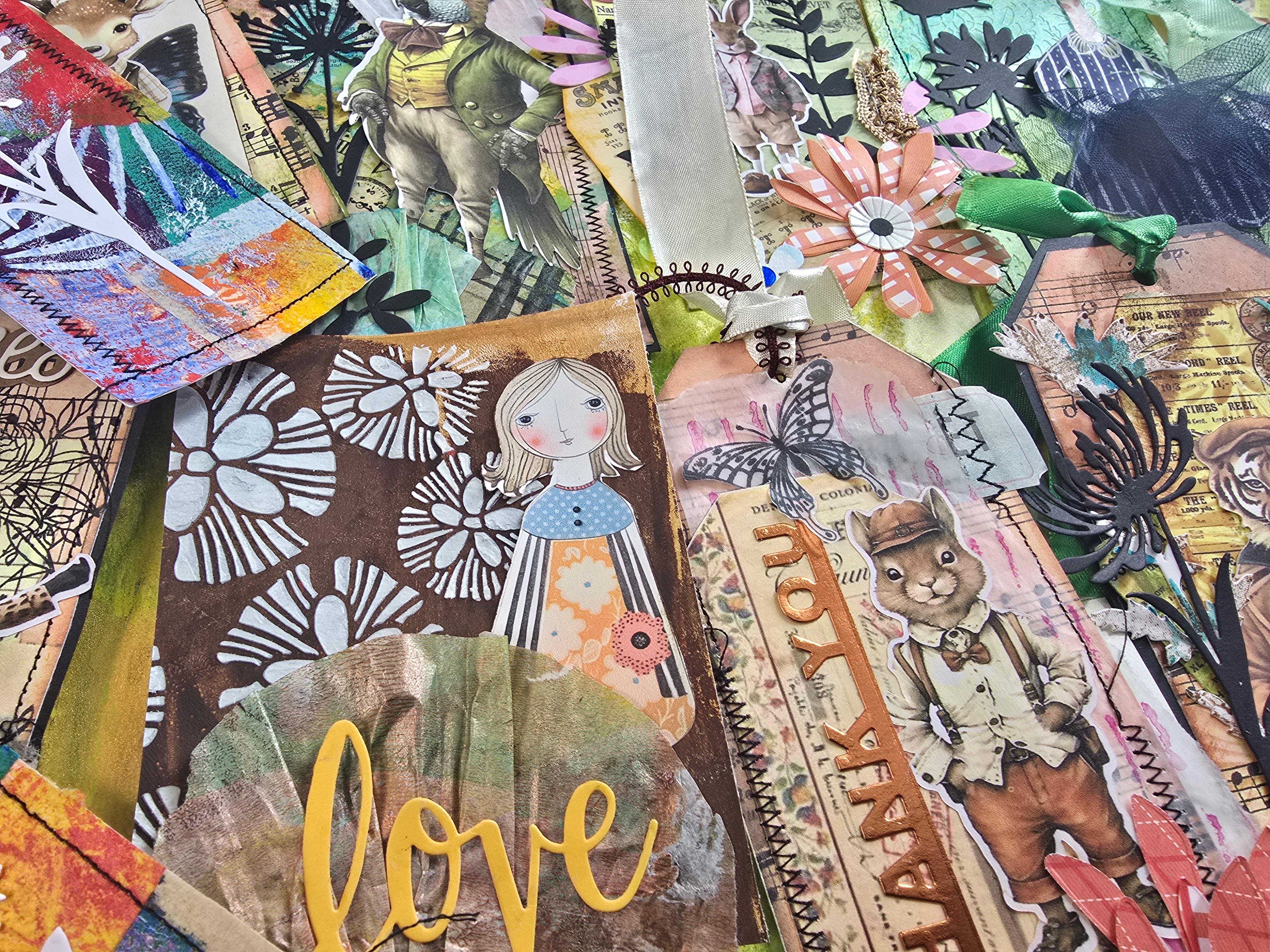
Make These Gorgeous Mixed Media Tags in Minutes


🎨 Make These Gorgeous Mixed Media Tags: A Simple & Joyful Creative Project

There’s something magical about turning bits and pieces—scraps, textures, old papers—into beautiful little works of art. That’s exactly what we’re doing today with mixed media tags!

Whether you’re new to mixed media or looking for a fun way to use up leftovers from your art table, this project is a joyful, low-pressure way to get creative.

Why Tags?

Tags are small, versatile, and just the right size to experiment without overwhelm. You can tuck them into junk journals, attach them to gifts, use them as bookmarks, or just collect them because they’re pretty!

What You’ll Need:

This is a great stash-busting project. Gather whatever you have on hand, like:

  • Old book pages or scrapbook paper

  • Paints (acrylics, watercolors—anything goes!)

  • Stamps, stencils, washi tape

  • Fabric or lace scraps

  • Glue, scissors, and a hole punch

Let’s Create:

  1. Start with a base – Cut out a tag shape from sturdy paper or recycled packaging.

  2. Layer it up – Add torn paper, paint, stamping, or texture paste. Play with color and shape.

  3. Add details – Think stitching, buttons, or a small quote. The charm is in the little things.

  4. Finish it off – Punch a hole at the top and thread a ribbon or twine through.

The best part? There’s no right or wrong. Each tag becomes its own little story.

Creative Tips:

✨ Try a theme—like vintage, floral, or seasonal.
✨ Use your tags to test new techniques or color combos.
✨ Make a bunch and bundle them as a handmade gift.


Want to see the full process in action?
👉 Watch the video tutorial here!


Final Thoughts:

Mixed media tags are a quick, satisfying creative escape, perfect for those moments when you just want to make something. So pull out your scraps, pour a cup of tea, and let your hands do the magic.

Tag me if you try this—I’d love to see what you create! 💖

#MixedMedia #CreativeReuse #DIYTags #JunkJournaling #MixedMediaArt #ScrappyCrafts


Sunday, April 6, 2025

I Created Amazing Mixed Media Collage Art with Fodder School 4


I Created Amazing MixMedia Collage Art with Fodder School 4

If you've ever found yourself lost in the joy of layering paper, splashing paint, and creating something from scraps and textures, then you’ll know the thrill I felt diving into my latest mixed-media collage project with Fodder School 4.


Want to see the full process in action?
👉 Watch the video tutorial here!


What is Fodder School?

Fodder School is a year-long, online mixed media art course that brings together inspiring teachers from around the world. Each month, a new instructor shares their process for creating collage fodder and a finished project. Fodder School 4 (this year’s edition) is packed with fresh ideas, techniques, and playful prompts that have been pushing me creatively in all the best ways.

Whether you're new to mixed media or a seasoned artist, there’s something magical about being part of this global community of collage lovers. The best part? There’s no “right” way to do it—just endless opportunities to experiment and explore.

My Creative Process

For this particular project, I started by making my own collage fodder:

  • painted papers

  • stamped textures

  • vintage book pages

  • tissue paper layers

  • scraps from past projects

I loved mixing up materials—some handmade, some found—to create a truly personal collection of collage elements. There’s something so satisfying about turning leftover bits into something beautiful and cohesive.

Once I had my pile of fodder ready, I moved on to creating a layered background using acrylics and gesso. I followed the lead of the month’s Fodder School teacher, adapting their techniques in my own way. I played with color, placement, and texture—trusting the process and letting the piece evolve organically.

What I Learned

One of the biggest lessons I’ve learned from Fodder School is that there’s beauty in imperfection. It’s easy to get caught up in trying to make everything look "right," but collage is all about happy accidents and letting the materials guide you.

Fodder School 4 has also taught me to slow down and really enjoy the making—every tear, every brushstroke, every decision feels like an act of creativity.

Final Thoughts

Creating this mixed media collage has been such a joyful experience. It reminded me why I love this kind of art: it’s expressive, intuitive, and deeply satisfying. If you're curious about mixed media or looking for a community to grow your creative practice, I highly recommend checking out Fodder School.

Are you part of Fodder School too? Have you tried your hand at mixed media collage? I’d love to hear your thoughts in the comments!

Until next time—keep creating, keep exploring, and don’t be afraid to make a beautiful mess. 🎨