Showing posts with label MIX MEDIA. Show all posts

Saturday, April 4, 2026

I Created Amazing Mixed Media Collage Art with Fodder School 5


I created an amazing MixMedia Collage Art with Fodder School 5

If you've ever found yourself lost in the joy of layering paper, splashing paint, and creating something from scraps and textures, then you’ll know the thrill I felt diving into my latest mixed-media collage project with Fodder School 5


Want to see the full process in action?
๐Ÿ‘‰ Watch the video tutorial here!


What is Fodder School?

Fodder School is a year-long, online mixed media art course that brings together inspiring teachers from around the world. Each month, a new instructor shares their process for creating collage fodder and a finished project. Fodder School 4 (this year’s edition) is packed with fresh ideas, techniques, and playful prompts that have been pushing me creatively in all the best ways.

Whether you're new to mixed media or a seasoned artist, there’s something magical about being part of this global community of collage lovers. The best part? There’s no “right” way to do it—just endless opportunities to experiment and explore.


My Creative Process

For this particular project, I started by making my own collage fodder:

  • painted papers

  • stamped textures

  • vintage book pages

  • tissue paper layers

  • scraps from past projects

I loved mixing up materials—some handmade, some found—to create a truly personal collection of collage elements. There’s something so satisfying about turning leftover bits into something beautiful and cohesive.

Once I had my pile of fodder ready, I moved on to creating a layered background using acrylics and gesso. I followed the lead of the month’s Fodder School teacher, adapting their techniques in my own way. I played with color, placement, and texture—trusting the process and letting the piece evolve organically.


What I Learned

One of the biggest lessons I’ve learned from Fodder School is that there’s beauty in imperfection. It’s easy to get caught up in trying to make everything look "right," but collage is all about happy accidents and letting the materials guide you.

Fodder School 4 has also taught me to slow down and really enjoy the making—every tear, every brushstroke, every decision feels like an act of creativity.

Final Thoughts

Creating this mixed media collage has been such a joyful experience. It reminded me why I love this kind of art: it’s expressive, intuitive, and deeply satisfying. If you're curious about mixed media or looking for a community to grow your creative practice, I highly recommend checking out Fodder School.

Are you part of Fodder School too? Have you tried your hand at mixed media collage? I’d love to hear your thoughts in the comments!

Until next time—keep creating, keep exploring, and don’t be afraid to make a beautiful mess. ๐ŸŽจ

Friday, June 27, 2025

๐Ÿงต Stitching in Art Journal Pages: Adding Text and Words to Your Art


๐Ÿงต Stitching in Art Journal Pages: Adding Text and Words to Your Art

When words meet thread, something magical happens.

Incorporating stitching into your art journal isn't just about texture—it's about storytelling. It’s a beautiful way to slow down, reflect, and give your pages a deeply personal, handmade touch. And when you use stitches to add words or text, your art becomes even more expressive.

Why Stitch Words Into Your Art Journal?

Most of us are used to writing or painting words on our pages. But stitching? It adds another layer—both visually and emotionally. Each letter, formed stitch by stitch, invites mindfulness. It creates intimacy and intention.

Plus, it's tactile! You can feel the texture. See the shadows. Watch thread weave meaning into your background.

What You’ll Need:

You don’t need fancy supplies to start stitching in your art journal. Just a few simple tools:

  • Needle (sharp enough for paper or fabric)

  • Embroidery thread or fine yarn

  • Awl or push pin (to pre-punch holes if working on thick paper)

  • Pencil (for sketching your word)

  • Fabric scraps (optional, for added texture)

  • Washi tape or fabric glue (to secure threads on the back)

Tip: Use lightweight paper or fabric layers if you're worried about tearing your journal pages.

How to Add Stitched Words to Your Pages

  1. Choose Your Word
    Pick a word that resonates with your page’s theme or your mood—like “breathe,” “hope,” or “grow.” You can also use short phrases or even stitched quotes!

  2. Sketch it Out
    Lightly draw your word where you want it to appear on the page. Use cursive or block letters—whatever matches your style.

  3. Pre-Punch the Holes
    Use an awl or push pin to make small holes along the lines of your letters. This makes stitching easier and keeps the paper from tearing.

  4. Start Stitching!
    Thread your needle and start sewing through the holes. A simple backstitch works great for most words. Don’t worry about perfection—it’s all about expression.

  5. Secure the Thread
    When finished, tape or glue down the thread ends on the back of the page so they stay put.

Ideas for Using Stitched Text

  • Highlight a quote that inspires you

  • Add a single word as the focal point

  • Stitch over fabric scraps for layered effects

  • Use thread color to match your theme or mood

A Slower, More Meaningful Process

Stitching words forces you to slow down, and that’s a good thing. It becomes a meditative practice. One letter at a time, your message unfolds—not just for the viewer, but for yourself.

You don’t need to be an expert in embroidery or sewing. Even the most basic stitches bring charm and character to your work. And over time, your confidence (and stitch vocabulary) will grow.

Monday, June 23, 2025

Common Stitch Types for Art Journals and the Best Fabrics to Use


๐Ÿงต Common Stitch Types for Art Journals and the Best Fabrics to Use

If you’ve ever wanted to bring more texture, story, and soul into your art journal, fabric and hand stitching can be a beautiful way to do it. Whether you’re creating a fabric journal from scratch or adding stitched elements to your mixed media pages, understanding a few basic stitch types and fabric choices can open up a whole new world of creative expression.

✨ Why Add Stitching to Your Art Journal?

Stitching adds dimension, texture, and a deeply personal touch to any journal page. It slows you down (in the best way), encourages mindful making, and allows you to literally "draw with thread." Each stitch becomes a mark of time, thought, and story.


๐Ÿงต Common Hand Stitch Types for Art Journals

You don’t need to know hundreds of techniques — just a few versatile stitches can get you started and go a long way.

1. Running Stitch

A simple up-and-down stitch that creates a dashed line. It’s great for outlines, borders, and attaching fabric to paper.

2. Backstitch

Stronger than the running stitch and perfect for writing with thread, outlining shapes, or stitching on heavier fabric.

3. Straight Stitch

One of the most versatile stitches — can be scattered for texture, grouped in patterns, or used as filler.

4. French Knots

Beautiful little dots that add texture and dimension. Ideal for creating tiny florals, decorative details, or visual accents.

5. Blanket Stitch

A classic edge stitch that works wonderfully to secure fabric around the edges of a journal page or patch.

6. Chain Stitch

Looks like a little chain and is perfect for borders, vines, or whimsical lines.


๐Ÿงต Best Fabrics to Use in Art Journals

Choosing the right fabric makes a big difference when you’re combining textiles and paper.

๐ŸŒฟ Muslin or Calico

Affordable, easy to stitch through, and perfect for dyeing or painting. A great base fabric for journaling.

๐ŸŒพ Linen

Has a beautiful texture and natural look. Slightly more open weave, so great for hand stitching.

๐Ÿ‘• Upcycled Cotton

Old shirts, pillowcases, or baby clothes — cotton is soft, easy to sew, and adds a personal touch to your journal.

๐Ÿงฃ Silk or Organza

For transparent, ethereal layers. Use with care — they can be delicate, but they add stunning effects.

๐Ÿงผ Tea-Stained or Dyed Fabrics

Pre-treat your fabrics with natural dyes, inks, or tea for a vintage, earthy feel that adds instant depth to your pages.


๐Ÿงต Tips for Stitching in Art Journals

  • Use embroidery thread or perle cotton for bold stitches and visible lines.

  • Pre-punch holes if stitching directly on paper to avoid tears.

  • Layer fabric over watercolor or collage for mixed media magic.

  • Work on loose pages before binding if you're planning a thick stitched design.


✂️ Stitch Your Story

Every stitch tells a story — of memory, mood, or meaning. As you play with thread and fabric in your journal, remember: there are no rules. Whether you're slow stitching as meditation or using it to hold scraps and secrets together, your fabric journal becomes a living, tactile archive of your creative journey.

What stitch will you try first?


Friday, June 20, 2025

Beautiful Stitching Techniques for Art Journals


 Stitching in Art Journal Pages

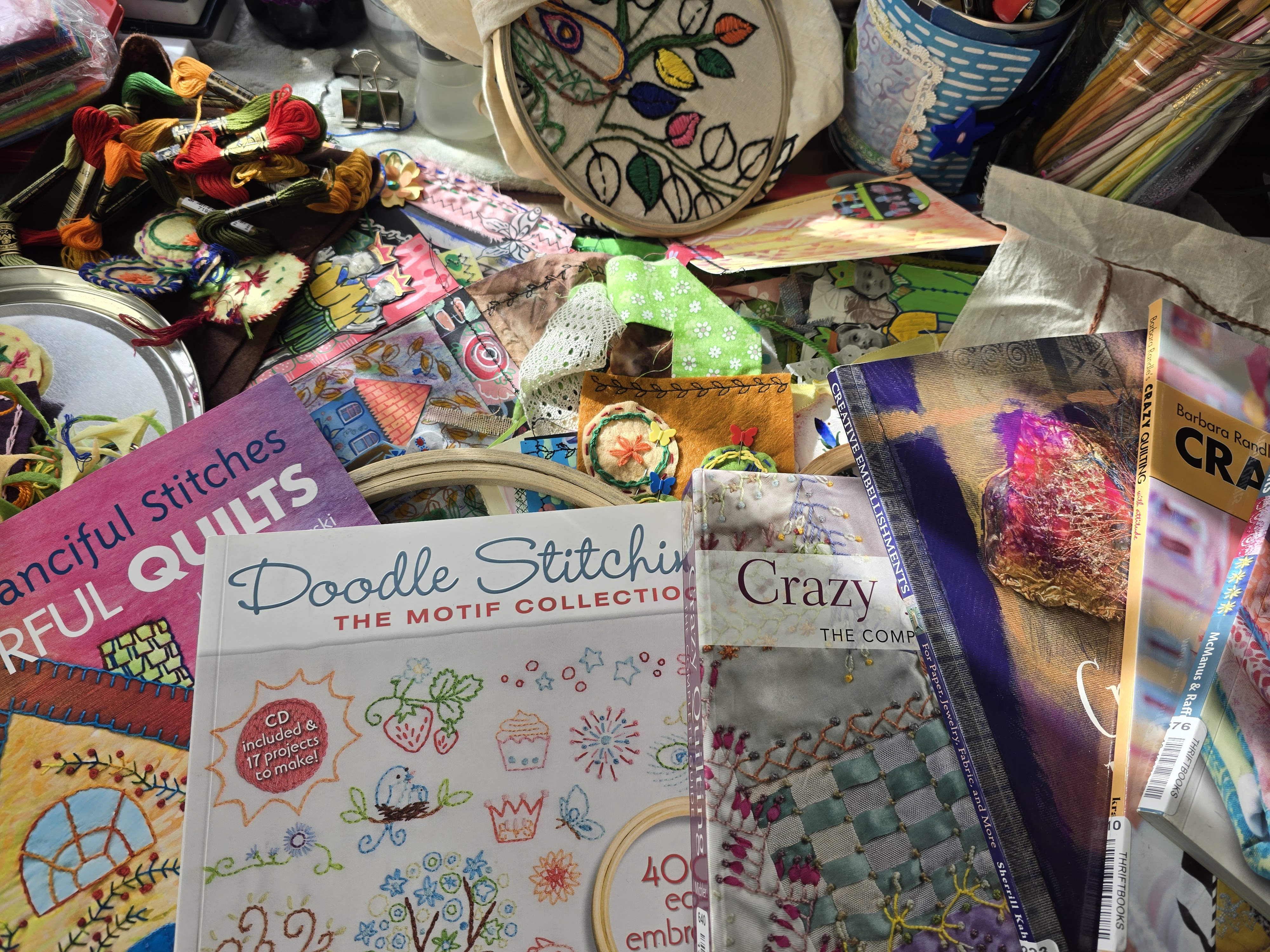
Stitching is a popular and expressive technique in art journaling, adding tactile texture, visual depth, and personal meaning to your pages. It can be done by hand or with a sewing machine, and offers a wide range of creative possibilities.

Benefits and Effects of Stitching in Art Journals

·         Adds texture and dimension, transforming flat pages into tactile works of art.

·         Creates a sense of connection-both between materials and between your thoughts and the physical page.

·         The process can be meditative, encouraging mindfulness and intentionality with each stitch.

·         Stitches can be symbolic, representing emotions, moments, or connections within your journal spread.

Common Stitch Types for Art Journals

Here are some popular stitches and their uses in art journaling.

Stitch Type

Description & Use

Running Stitch

Simple, straight stitches for outlines, borders, or subtle texture

Backstitch

Solid, continuous line for outlines or writing words directly on the page

Cross Stitch

Decorative “X” shapes for patterns or filling areas with color

French Knot

Small, raised knots for accents like flower centers or stars

Blanket Stitch

Looped border for finishing edges or framing sections

Whip Stitch

Twisted, rope-like stitch for attaching elements or joining layers

Chain Stitch

Looped, chain-like line for flowing curves or movement

Satin Stitch

Dense, smooth fill for blocks of color or focal points

Seed Stitch

Scattered, tiny stitches for organic background texture

Abstract Stitch

Freeform, irregular stitches-often with fabric scraps-for expressive effects


Techniques and Tips

·         Hand Stitching vs. Machine Stitching: Both methods are effective. Hand stitching offers more control and intimacy, while machine stitching is faster and can create decorative effects with built-in patterns.

·         Materials: You can stitch directly on paper, fabric, or a combination. Use embroidery thread, topstitch thread, or even regular sewing thread. For heavier embellishments, consider using fabric or interfacing for stability.

·         Layering: Stitching can be used to attach collage elements, fabric patches, or paper strips, adding both structure and visual interest.

·         Edges and Borders: Decorative stitches like zig-zag or blanket stitch can be used to finish edges, frame sections, or create interesting page borders.

·         Binding: You can sew signatures (groups of pages) together or even create fabric-covered art journals using sewing techniques for the covers and spine.

Creative Inspiration

·         Use stitching to attach meaningful mementos, fabric scraps, or textured papers.

·         Experiment with colored threads to create contrast or highlight important areas.

·         Try “slow stitching” as a mindful, calming practice-perfect for on-the-go journaling.

·         Let loose threads, knots, and irregularities become part of the art, adding character and narrative.

Final Thoughts

Stitching in art journals is more than just a decorative technique-it’s a way to infuse your pages with emotion, intention, and a unique tactile quality. Whether you’re outlining, embellishing, or binding, each stitch becomes a mark of your creative journey