Showing posts with label Intuitive Painting paint and creat. Show all posts

Saturday, April 4, 2026

I Created Amazing Mixed Media Collage Art with Fodder School 5


I created an amazing MixMedia Collage Art with Fodder School 5

If you've ever found yourself lost in the joy of layering paper, splashing paint, and creating something from scraps and textures, then you’ll know the thrill I felt diving into my latest mixed-media collage project with Fodder School 5


Want to see the full process in action?
๐Ÿ‘‰ Watch the video tutorial here!


What is Fodder School?

Fodder School is a year-long, online mixed media art course that brings together inspiring teachers from around the world. Each month, a new instructor shares their process for creating collage fodder and a finished project. Fodder School 4 (this year’s edition) is packed with fresh ideas, techniques, and playful prompts that have been pushing me creatively in all the best ways.

Whether you're new to mixed media or a seasoned artist, there’s something magical about being part of this global community of collage lovers. The best part? There’s no “right” way to do it—just endless opportunities to experiment and explore.


My Creative Process

For this particular project, I started by making my own collage fodder:

  • painted papers

  • stamped textures

  • vintage book pages

  • tissue paper layers

  • scraps from past projects

I loved mixing up materials—some handmade, some found—to create a truly personal collection of collage elements. There’s something so satisfying about turning leftover bits into something beautiful and cohesive.

Once I had my pile of fodder ready, I moved on to creating a layered background using acrylics and gesso. I followed the lead of the month’s Fodder School teacher, adapting their techniques in my own way. I played with color, placement, and texture—trusting the process and letting the piece evolve organically.


What I Learned

One of the biggest lessons I’ve learned from Fodder School is that there’s beauty in imperfection. It’s easy to get caught up in trying to make everything look "right," but collage is all about happy accidents and letting the materials guide you.

Fodder School 4 has also taught me to slow down and really enjoy the making—every tear, every brushstroke, every decision feels like an act of creativity.

Final Thoughts

Creating this mixed media collage has been such a joyful experience. It reminded me why I love this kind of art: it’s expressive, intuitive, and deeply satisfying. If you're curious about mixed media or looking for a community to grow your creative practice, I highly recommend checking out Fodder School.

Are you part of Fodder School too? Have you tried your hand at mixed media collage? I’d love to hear your thoughts in the comments!

Until next time—keep creating, keep exploring, and don’t be afraid to make a beautiful mess. ๐ŸŽจ

Friday, June 27, 2025

๐Ÿงต Stitching in Art Journal Pages: Adding Text and Words to Your Art


๐Ÿงต Stitching in Art Journal Pages: Adding Text and Words to Your Art

When words meet thread, something magical happens.

Incorporating stitching into your art journal isn't just about texture—it's about storytelling. It’s a beautiful way to slow down, reflect, and give your pages a deeply personal, handmade touch. And when you use stitches to add words or text, your art becomes even more expressive.

Why Stitch Words Into Your Art Journal?

Most of us are used to writing or painting words on our pages. But stitching? It adds another layer—both visually and emotionally. Each letter, formed stitch by stitch, invites mindfulness. It creates intimacy and intention.

Plus, it's tactile! You can feel the texture. See the shadows. Watch thread weave meaning into your background.

What You’ll Need:

You don’t need fancy supplies to start stitching in your art journal. Just a few simple tools:

  • Needle (sharp enough for paper or fabric)

  • Embroidery thread or fine yarn

  • Awl or push pin (to pre-punch holes if working on thick paper)

  • Pencil (for sketching your word)

  • Fabric scraps (optional, for added texture)

  • Washi tape or fabric glue (to secure threads on the back)

Tip: Use lightweight paper or fabric layers if you're worried about tearing your journal pages.

How to Add Stitched Words to Your Pages

  1. Choose Your Word
    Pick a word that resonates with your page’s theme or your mood—like “breathe,” “hope,” or “grow.” You can also use short phrases or even stitched quotes!

  2. Sketch it Out
    Lightly draw your word where you want it to appear on the page. Use cursive or block letters—whatever matches your style.

  3. Pre-Punch the Holes
    Use an awl or push pin to make small holes along the lines of your letters. This makes stitching easier and keeps the paper from tearing.

  4. Start Stitching!
    Thread your needle and start sewing through the holes. A simple backstitch works great for most words. Don’t worry about perfection—it’s all about expression.

  5. Secure the Thread
    When finished, tape or glue down the thread ends on the back of the page so they stay put.

Ideas for Using Stitched Text

  • Highlight a quote that inspires you

  • Add a single word as the focal point

  • Stitch over fabric scraps for layered effects

  • Use thread color to match your theme or mood

A Slower, More Meaningful Process

Stitching words forces you to slow down, and that’s a good thing. It becomes a meditative practice. One letter at a time, your message unfolds—not just for the viewer, but for yourself.

You don’t need to be an expert in embroidery or sewing. Even the most basic stitches bring charm and character to your work. And over time, your confidence (and stitch vocabulary) will grow.

Friday, June 20, 2025

Beautiful Stitching Techniques for Art Journals


 Stitching in Art Journal Pages

Stitching is a popular and expressive technique in art journaling, adding tactile texture, visual depth, and personal meaning to your pages. It can be done by hand or with a sewing machine, and offers a wide range of creative possibilities.

Benefits and Effects of Stitching in Art Journals

·         Adds texture and dimension, transforming flat pages into tactile works of art.

·         Creates a sense of connection-both between materials and between your thoughts and the physical page.

·         The process can be meditative, encouraging mindfulness and intentionality with each stitch.

·         Stitches can be symbolic, representing emotions, moments, or connections within your journal spread.

Common Stitch Types for Art Journals

Here are some popular stitches and their uses in art journaling.

Stitch Type

Description & Use

Running Stitch

Simple, straight stitches for outlines, borders, or subtle texture

Backstitch

Solid, continuous line for outlines or writing words directly on the page

Cross Stitch

Decorative “X” shapes for patterns or filling areas with color

French Knot

Small, raised knots for accents like flower centers or stars

Blanket Stitch

Looped border for finishing edges or framing sections

Whip Stitch

Twisted, rope-like stitch for attaching elements or joining layers

Chain Stitch

Looped, chain-like line for flowing curves or movement

Satin Stitch

Dense, smooth fill for blocks of color or focal points

Seed Stitch

Scattered, tiny stitches for organic background texture

Abstract Stitch

Freeform, irregular stitches-often with fabric scraps-for expressive effects


Techniques and Tips

·         Hand Stitching vs. Machine Stitching: Both methods are effective. Hand stitching offers more control and intimacy, while machine stitching is faster and can create decorative effects with built-in patterns.

·         Materials: You can stitch directly on paper, fabric, or a combination. Use embroidery thread, topstitch thread, or even regular sewing thread. For heavier embellishments, consider using fabric or interfacing for stability.

·         Layering: Stitching can be used to attach collage elements, fabric patches, or paper strips, adding both structure and visual interest.

·         Edges and Borders: Decorative stitches like zig-zag or blanket stitch can be used to finish edges, frame sections, or create interesting page borders.

·         Binding: You can sew signatures (groups of pages) together or even create fabric-covered art journals using sewing techniques for the covers and spine.

Creative Inspiration

·         Use stitching to attach meaningful mementos, fabric scraps, or textured papers.

·         Experiment with colored threads to create contrast or highlight important areas.

·         Try “slow stitching” as a mindful, calming practice-perfect for on-the-go journaling.

·         Let loose threads, knots, and irregularities become part of the art, adding character and narrative.

Final Thoughts

Stitching in art journals is more than just a decorative technique-it’s a way to infuse your pages with emotion, intention, and a unique tactile quality. Whether you’re outlining, embellishing, or binding, each stitch becomes a mark of your creative journey

Thursday, March 6, 2025

My journey on how I learned to draw face


My Journey: How I Learned to Draw Faces ๐ŸŽจ

Drawing faces has always fascinated me. There’s something magical about capturing emotions, expressions, and personality on paper. But when I first started, it felt impossible—eyes were uneven, noses looked strange, and proportions were all over the place. If you’ve ever struggled with drawing faces, trust me, I’ve been there too. In this post, I’ll share my journey, the struggles I faced, and the steps that helped me improve.


The Beginning: Where I Started

Like many artists, I began by doodling faces in my notebooks. I had no idea about proportions or structure, so my sketches looked cartoonish and inconsistent. I tried copying from photos, but I often got frustrated when things didn’t turn out the way I imagined.

At one point, I almost gave up. But then I realized—drawing is a skill that can be learned with practice and patience. So, I decided to commit to improving.


The Learning Process

1. Understanding Basic Proportions

One of the biggest breakthroughs for me was learning the basic structure of the face. I discovered the Loomis method, which uses a simple sphere and guidelines to build the head. This helped me place features more accurately instead of guessing where things should go.

2. Studying Facial Features Individually

Instead of trying to draw a complete face all at once, I broke it down:

  • Eyes: I practiced different eye shapes and expressions. I learned that the upper eyelid is usually darker and that small details like eyelashes and reflections make a huge difference.

  • Noses: Instead of outlining the nose, I focused on shading to create depth.

  • Lips: Understanding how light hits the lips helped me make them look more realistic.

  • Ears: Honestly, ears were tricky, but breaking them into simple shapes made them easier to draw.


3. Observing and Sketching Daily

I started sketching faces every day, using references from photos, movies, and even people around me. I also studied how light affects the face—shadows and highlights can completely change the mood of a portrait.

4. Learning from Other Artists

Watching tutorials and analyzing different art styles helped me figure out what I liked. Some artists focused on realism, while others had a more stylized approach. I experimented with different techniques until I found a style that felt natural to me.

Overcoming Challenges

There were times when I felt stuck, like my drawings weren’t improving. Here’s what helped me push through:

  • Comparing progress: Looking back at my old sketches reminded me how far I had come.

  • Experimenting with different mediums: Trying digital art, charcoal, and watercolor gave me fresh perspectives.

  • Taking breaks: Stepping away from my art and coming back later helped me see mistakes more clearly.

Where I Am Now

I’m still learning, and that’s the beauty of art—it’s a continuous journey. I’m now more confident in drawing faces, but I also know there’s always more to explore. If you’re struggling with drawing faces, don’t give up! You'll see improvement with practice, patience, and the right techniques.

Have you tried drawing faces before? What challenges have you faced? Let’s share our experiences in the comments!


  Happy creating, and don’t forget to let your imagination grow! ๐Ÿ„✨

Follow me on InstagramFacebookPinterest, and YouTube

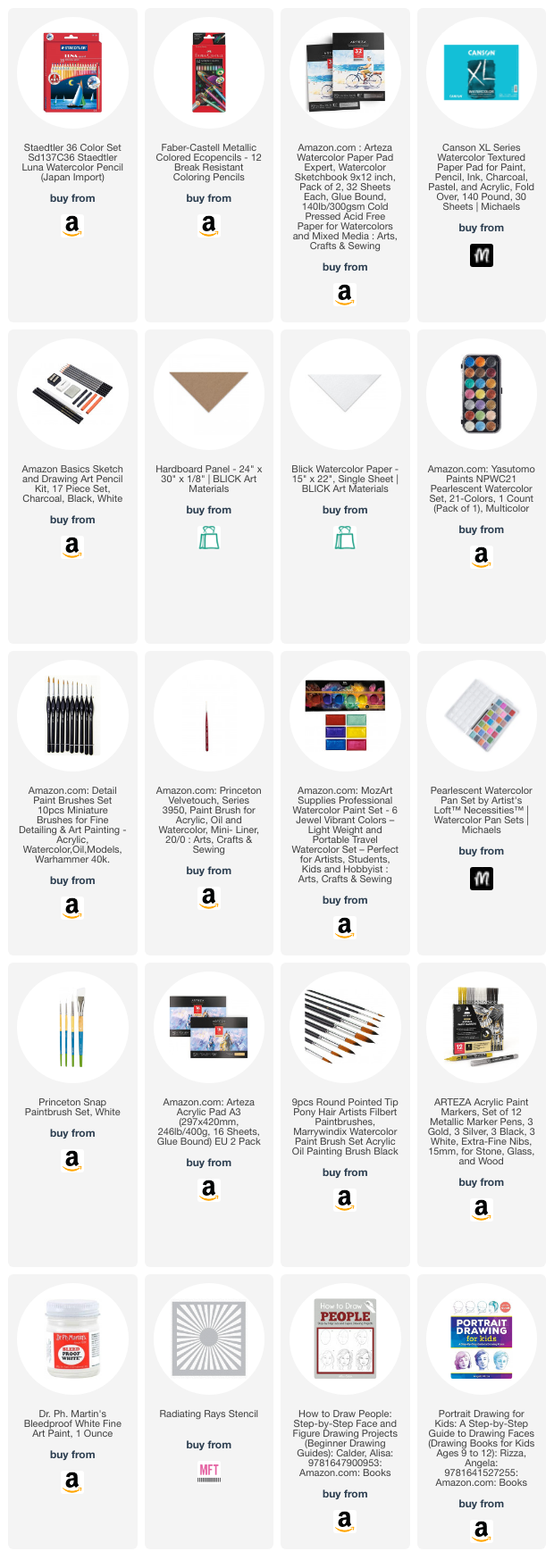
I get asked a lot about where to purchase the supplies I use in my videos and blog posts. I list all the supplies I use at the end of my posts (below) 

SUPPLIES