Monday, June 9, 2025

What are some tips for packing embroidery supplies for air travel


What are some tips for packing embroidery supplies for air travel

Here are some expert tips for packing embroidery supplies for air travel:


Packing Tips for Embroidery Supplies on Airplanes

Use TSA-approved travel scissors: Choose small scissors under 6 inches like Fiskars folding travel scissors or thread snips with blunt tips, which are less likely to be confiscated at security.


Carry extra needles and use a magnetic needle minder: Pre-thread several needles and keep them secure in a needle case or with a magnetic needle minder to avoid losing them during the flight.


Organize floss and tools in compact containers: Use small hinged tins or thread storage boxes to keep floss, needles, and tools tidy and easy to access in your carry-on.


Prepare your project before travel: Cut fabric to size, transfer patterns, wind thread on bobbins, and stretch fabric in your hoop at home to minimize what you need to bring and simplify stitching on the plane.


Pack a project pouch: An A5-sized pouch can hold a 5-inch hoop, fabric, thread, and tools, keeping everything organized and portable.


Select projects with similar color palettes and only bring the thread you need: This reduces the amount of floss you carry and allows you to switch between projects without overpacking.


Be mindful of airline restrictions: Check airline and TSA rules about scissors and sharp objects before packing. Some travelers carry scissors they are willing to part with if confiscated or use alternative thread cutters.


Use a drawstring bag or scrappy project bag: These provide secure, attractive storage that prevents supplies from spilling in your carry-on.


Consider thread gloss for easier needle threading: Especially useful when wearing a mask on the plane, thread gloss helps tame floss ends for easier threading without needing to put your mask down.


Keep metal items visible and separate: Store scissors, needles, and other metal bits in a clear bag or separate container to ease TSA inspections and avoid delays.


Summary

Pack a compact, well-organized kit with TSA-compliant scissors or snips, extra needles secured with a magnetic minder, pre-prepped fabric and thread, and use small tins or pouches for easy access. Always check airline restrictions beforehand and consider alternatives like thread gloss and thread cutters to streamline your travel embroidery experience. This approach ensures smooth security checks and enjoyable stitching during your flight


TRAVEL EMRODARY KIT DOS AND DON'TS

ane seats or car rides

Don'ts for a Travel Embroidery Kit

Don’t start stitching without a hoop: Stitching without a hoop can lead to uneven tension and puckered fabriC

Don’t bring too many supplies: Avoid overpacking; bring only what you need to save space and reduce frustration

Don’t use blunt or old needles: These can damage fabric and thread, making stitching harder and less enjoyable

Don’t lose your needles: Losing needles while traveling can be stressful and dangerous, so always store them securely and put them back in their case when not in use

Don’t rely on flimsy storage: Avoid using ziplock bags alone as they may not be durable or secure enough; instead, use sturdy project bags or tins

Summary

A well-prepared travel embroidery kit should be compact, organized, and secure, including a small hoop, sharp needles, selected floss, fabric pre-cut and pressed, travel-friendly scissors, and a reliable storage solution. Prepare as much as possible before leaving home to maximize stitching time and minimize hassle. Secure needles carefully to avoid loss or injury, and pack only what you need to keep your kit manageable and enjoyable on the go


What are some alternatives to traditional scissors for travel


Here are some practical alternatives to traditional scissors for travel embroidery and needlework:


Thread snips: Small, spring-loaded thread snips are popular for travel because they are compact and easy to use for quick thread trimming. They often have a blade length short enough to pass TSA screening and are less likely to be confiscated.


Fingernail clippers: Many travelers use fingernail clippers to cut threads or small ties, especially when scissors are not allowed. Clippers without attached files are less likely to be confiscated and can serve as a handy cutting tool.


Small folding scissors: While technically scissors, tiny folding scissors (like Dritz travel scissors) fold to a compact size and are often allowed in carry-on luggage. However, confiscation can be random, so it’s best not to bring expensive or irreplaceable pairs.


Thread cutters worn as pendants: Some thread cutters are designed as pendants or keychains with a small blade inside a protective housing, making them travel-friendly and easy to carry around the neck.


Dental floss containers with built-in cutters: These can be used to snip threads and are generally TSA-friendly since they are not traditional cutting tools.


Using larger tapestry needles as laying tools: For certain tasks like flattening threads, a larger needle can substitute for specialized tools that might not be allowed in carry-on bags.


In summary, thread snips and fingernail clippers are the most common and TSA-friendly alternatives to traditional scissors for travel embroidery. Small folding scissors and pendant-style thread cutters are also options but may carry some risk of confiscation depending on airport security. Packing inexpensive or replaceable cutting tools minimizes loss risk during air travel.

WHAT IS DIFFERENCE BETWEEN SLOW STICHING AND EMRODORY

The difference between slow stitching and embroidery lies primarily in their purpose, approach, and mindset:


Embroidery

Embroidery is the general art or craft of decorating fabric or other materials with needle and thread or yarn, often to create detailed, decorative patterns or images.


It can be done by hand or machine and typically aims for a polished, finished product, often with precise and sometimes complex stitches.


Embroidery is focused on embellishment and can include a wide range of techniques and styles, often emphasizing skill and aesthetics.


Slow Stitching

Slow stitching is a mindful, meditative practice that emphasizes the process of stitching rather than the finished product.


It involves hand stitching in a relaxed, unhurried way, often using simple running stitches or freeform stitches, and embracing imperfections.


Rooted in traditions like Japanese Boro and Sashiko, slow stitching encourages connection to the moment, mindfulness, creativity, and sustainability by using scraps or mending existing fabrics.


The goal is to slow down, enjoy the tactile experience, and find calm and presence through stitching, rather than focusing on perfection or complexity.


Slow stitching is often described as a spiritual or wellness practice, fostering self-awareness and emotional benefits through intentional, slow creativity.


Summary Table

Aspect                                      Embroidery         Slow Stitching

Purpose               Decorative embellishment            Mindful, meditative stitching process

Focus    Finished product and design precision     Process, mindfulness, and imperfection

Techniques          Wide range, often intricate           Simple running stitches, freeform

Tools      Hand or machine needle, varied stitches Mainly hand stitching with simple stitches

Materials             New or chosen fabrics and threads           Often uses scraps, recycled fabrics

Mindset               Skill and aesthetics          Relaxation, presence, creativity

In essence, embroidery is the broader craft of decorative stitching, while slow stitching is a contemporary movement and philosophy that values the mindful, slow, and imperfect act of hand stitching as a form of meditation and creative expression


Happy creating, and don’t forget to let your imagination grow! ๐Ÿ„✨

Follow me on InstagramFacebookPinterest, and YouTube,

I get asked a lot about where to purchase the supplies I use in my videos and blog posts. I list all the supplies I use at the end of my posts (below) 

Friday, June 6, 2025

๐Ÿงต Stitching in Art Journal Pages: Add Texture, Depth, and Story to Your Art


๐Ÿงต Stitching in Art Journal Pages: Add Texture, Depth, and Story to Your Art

Keywords: art journaling, stitching in art journal, mixed media journal, hand stitching, sewing in journal, creative journaling techniques


✨ Why Stitching Belongs in Your Art Journal

Stitching isn’t just for fabric lovers or textile artists—it’s a deeply expressive technique that brings texture, emotion, and durability to your art journal pages.

Whether you’re sewing by hand or using a machine, stitching transforms a flat surface into a multi-sensory experience. It adds layers—literally and metaphorically.


๐Ÿงฐ Tools & Materials for Stitching in Your Art Journal

You don’t need a fancy setup to get started. Here’s what you’ll want:

Basic Supplies:

  • Art journal – thicker pages work best

  • Needle – embroidery, bookbinding, or sewing needles

  • Thread – embroidery floss, cotton, metallic, or colored threads

  • Scissors

  • Piercing tool or awl – for pre-punching holes when stitching by hand

Optional:

  • Sewing machine

  • Fabric scraps, lace, or paper ephemera

  • Washi tape or fabric tape (for reinforcing thin pages)


๐Ÿ’ก Creative Ways to Use Stitching in Art Journaling

Incorporating stitching into your pages can be playful or profound. Try these ideas:

  • ๐Ÿงต Borders & Frames: Stitch around the page edges to frame your layout.

  • ๐ŸŽจ Collage Anchoring: Sew fabric, photos, or paper scraps into place.

  • ✍️ Thread as Linework: Let thread act as doodles, underlines, or paths.

  • ๐Ÿ’ฌ Stitched Words: Sew words or affirmations for a handmade, poetic look.

  • ๐Ÿ”ง Fix & Reinforce: Repair torn pages using intentional, visible mending.

๐ŸŒŸ Pro Tip: Stitching doesn’t have to be neat—imperfection adds character.


๐Ÿงต Hand Stitching vs. Machine Stitching: Which to Choose?

Both have their strengths, and they’re not mutually exclusive!

Hand Stitching:

  • Meditative and slow-paced

  • Great for small designs, shapes, and intentional detail

  • Easy to do anywhere—no machine required

Machine Stitching:

  • Fast and texturally bold

  • Perfect for framing, layering, or chaotic lines

  • Adds an industrial, mixed-media flair

Heads up: Stitching on paper can dull your needle. Keep an old one just for art journaling.


๐Ÿ› ️ Tips for Successful Stitching in Your Art Journal

  • Reinforce fragile pages with washi tape or an extra backing layer.

  • Pre-punch holes with an awl or needle for easier hand stitching.

  • Use short thread lengths to avoid tangling.

  • Don’t worry about perfection. Messy stitching tells its own story.


๐Ÿงต Stitching = Storytelling

There’s something sacred in stitching—it’s slow, deliberate, and intimate. When you sew into your art journal, you're weaving your thoughts, emotions, and memories into each page.

In a world of fast clicks and digital blur, stitching brings you back to the rhythm of your hands. Every loop, knot, and crossing thread becomes part of your visual language.


๐Ÿ’ฌ Let's Connect!

Have you tried stitching in your art journal? Do you prefer hand stitching or using a machine?

Drop a comment below or tag me on Instagram at [@YourHandleHere] to share your stitched pages!

Friday, May 30, 2025

TRAVEL WATER COLOUR KIT DOS AND DON'TS

 TRAVEL WATER COLOUR KIT DOS AND DON'TS


Here are some key dos and don'ts for packing and using a travel watercolor kit based on expert advice:

Dos

·         Do choose watercolor pan sets: Pan palettes are compact, mess-free, and ideal for travel since they include multiple colors and mixing areas in one box

·         Do pre-fill and dry tube paints in your palette: If you prefer tube paints, fill your palette several days before traveling to let the paint dry and avoid spills

·         Do bring a variety of brushes: Pack a small selection of favorite brushes (e.g., a rigger, round, and detail brush) that suit your style and fit your travel kit

·         Do carry watercolor paper pads or blocks: Blocks are especially convenient because they are glued on all sides and don’t require taping or boards, making them easy to use on the go

·         Do bring a water container: Use a small collapsible cup or a waterbrush (a brush with a water reservoir) to avoid carrying bulky water cups

·         Do pack a cloth or paper towels: For wiping brushes and controlling water on your brush, a small cloth or paper towels are essential

·         Do organize your kit in a compact, sturdy case: Use a travel palette with a secure lid and a brush roll or small pouch to keep supplies neat and portable

·         Do check TSA rules for liquids: Small bottles of liquid watercolor or concentrated inks under 3 oz can usually be carried in a carry-on if packed properly in ziplock bags


Don'ts

·         Don’t bring messy tube paints without preparation: Tubes can leak or ooze during travel, especially honey-based paints; pre-filling palettes and drying them beforehand helps prevent mess

·         Don’t use large water containers: Avoid bulky rinse cups; instead, use small collapsible cups or waterbrushes to save space and weight

·         Don’t forget to protect your paper: Loose sheets can be damaged easily; use blocks or sturdy backing boards to keep paper flat and safe

·         Don’t overpack colors: Choose a limited palette of your favorite or most-used colors to keep your kit light and manageable

·         Don’t rely on drinking cups for rinsing: Avoid using your drinking cup as a rinse water container to keep your water clean and your painting hygienic

·         Don’t forget to bring basics: Pencil, eraser, and a cloth for wiping brushes are often overlooked but essential for a smooth painting experience

In summary, a good travel watercolor kit is compact, organized, and prepared in advance with pan sets or dried tube paints, a few versatile brushes, watercolor blocks or pads, and small water containers. Avoid bulky or messy supplies and pack only what you need to enjoy painting easily wherever you go.

Are there any must-have accessories for a watercolor travel kit

Here are some must-have accessories for a watercolor travel kit, gathered from artist recommendations and travel watercolor experts:

Must-Have Accessories for a Watercolor Travel Kit

·         Watercolor Paper Pad or Block: A small, portable watercolor pad or block is essential. Blocks are especially convenient because the paper is glued on all sides, preventing warping and eliminating the need for taping

·         Compact Watercolor Palette: Pan sets or small folding palettes that hold multiple colors are ideal for travel. Pre-filling and drying tube paints in palettes before travel can help avoid messes

·         Variety of Brushes: Bring a small selection of travel-friendly brushes, including travel brushes and water brushes (brushes with built-in water reservoirs) for convenience. Having a few brushes dedicated to different color families (warm, cool, neutral) helps prevent muddy colors

·         Water Container: A collapsible silicone cup or a small water bottle is handy for rinsing brushes. Some artists carry two cups-one for clean water and one for rinsing

·         Spray Bottle: A mini spray bottle is useful for moistening paints or paper on the go, especially in dry environments

·         Pencils and Erasers: Mechanical pencils for sketching and kneaded erasers for corrections are important for prepping your painting

·         Cloth, Sponge, or Paper Towels: For wiping brushes and controlling water, a small cloth, sponge, or paper towels are essential

·         Binder or Bulldog Clips: Useful for securing loose sheets of paper to a board or sketchbook, especially in windy conditions

·         Portable Sketchbook or Notebook: Spiral-bound or hardbound sketchbooks that lay flat are preferred for ease of painting and sketching

·         Pen for Mark Making: Waterproof pens like Pigma Microns are often included for adding details or outlines to watercolor work

·         Compact Storage Case or Roll: A sturdy, compact case or brush roll keeps all supplies organized and protected during travel


Summary

A well-rounded travel watercolor kit includes a portable watercolor paper pad or block, a compact palette with your favorite colors, a few versatile brushes (including water brushes), a collapsible water container, a mini spray bottle, pencils and erasers, cloth or sponges for brush care, clips for securing paper, and a sturdy case to keep everything organized. These accessories maximize convenience, minimize mess, and enhance your ability to paint comfortably on the go.

Happy creating, and don’t forget to let your imagination grow! ๐Ÿ„✨

Follow me on InstagramFacebookPinterest, and YouTube,

I get asked a lot about where to purchase the supplies I use in my videos and blog posts. I list all the supplies I use at the end of my posts (below) 


https://ldli.co/e/qy1om7r

Thursday, May 1, 2025

Slow Stitching vs. Embroidery: What’s the Difference?


Slow Stitching vs. Embroidery: What’s the Difference?

In the world of needle and thread, two beautiful techniques often come up in conversation: slow stitching and embroidery. While they may seem similar at first glance—both involve hand sewing and artistic creativity—they serve different purposes and follow different philosophies. If you're curious about what sets these two apart, you're in the right place.

What Is Slow Stitching?

Slow stitching is more than just a technique—it's a mindful, meditative practice. Think of it like the "slow food" movement, but for textiles. Slow stitching isn’t about perfection or following strict patterns. Instead, it emphasizes creativity, mindfulness, and process over product.

Key Features of Slow Stitching:

  • Freeform style: No rules, patterns, or expectations.

  • Mindfulness: Done slowly and intentionally, often for relaxation.

  • Recycled materials: Often uses scraps, old fabric, and vintage textiles.

  • Focus on the journey: It’s about enjoying the act of sewing, not just the final result.

Slow stitching is ideal for those who want to disconnect from fast-paced life and connect with their creativity in a gentle, expressive way.

What Is Embroidery?

Embroidery is a decorative needlework technique that involves stitching designs onto fabric using various stitches, patterns, and colors. It’s been practiced for centuries across cultures and is often seen in traditional garments, home decor, and fine art.

Key Features of Embroidery:

  • Pattern-based: Often follows a pre-designed motif or template.

  • Precise stitches: Requires technique and skill to create uniform, neat results.

  • Decorative purpose: Used to embellish fabrics with beauty and detail.

  • Wide range of stitches: Includes satin stitch, chain stitch, French knots, and more.

Embroidery is perfect for those who enjoy structured design, detailed work, and turning fabric into a canvas for intricate artwork.

Major Differences at a Glance:

AspectSlow StitchingEmbroidery
PurposeMeditation, expressionDecoration, design
StructureFreeform, unplannedPatterned, intentional
MaterialsOften recycled or vintageUsually clean, specific fabrics
Skill level neededBeginner-friendlyCan range from basic to advanced
FocusProcess and emotionAppearance and technique

Which One Should You Try?

If you're looking to relax, reflect, or repurpose old fabric in a creative way, slow stitching might be your calling. On the other hand, if you're excited to learn detailed stitches and create beautiful designs, embroidery offers endless artistic possibilities.

Either way, both practices are deeply rewarding and bring you closer to the tactile joy of handcrafting.


Happy creating, and don’t forget to let your imagination grow! ๐Ÿ„✨

Follow me on InstagramFacebookPinterest, and YouTube,

I get asked a lot about where to purchase the supplies I use in my videos and blog posts. I list all the supplies I use at the end of my posts (below) 
Monday, April 7, 2025

Make These Gorgeous Mixed Media Tags in Minutes


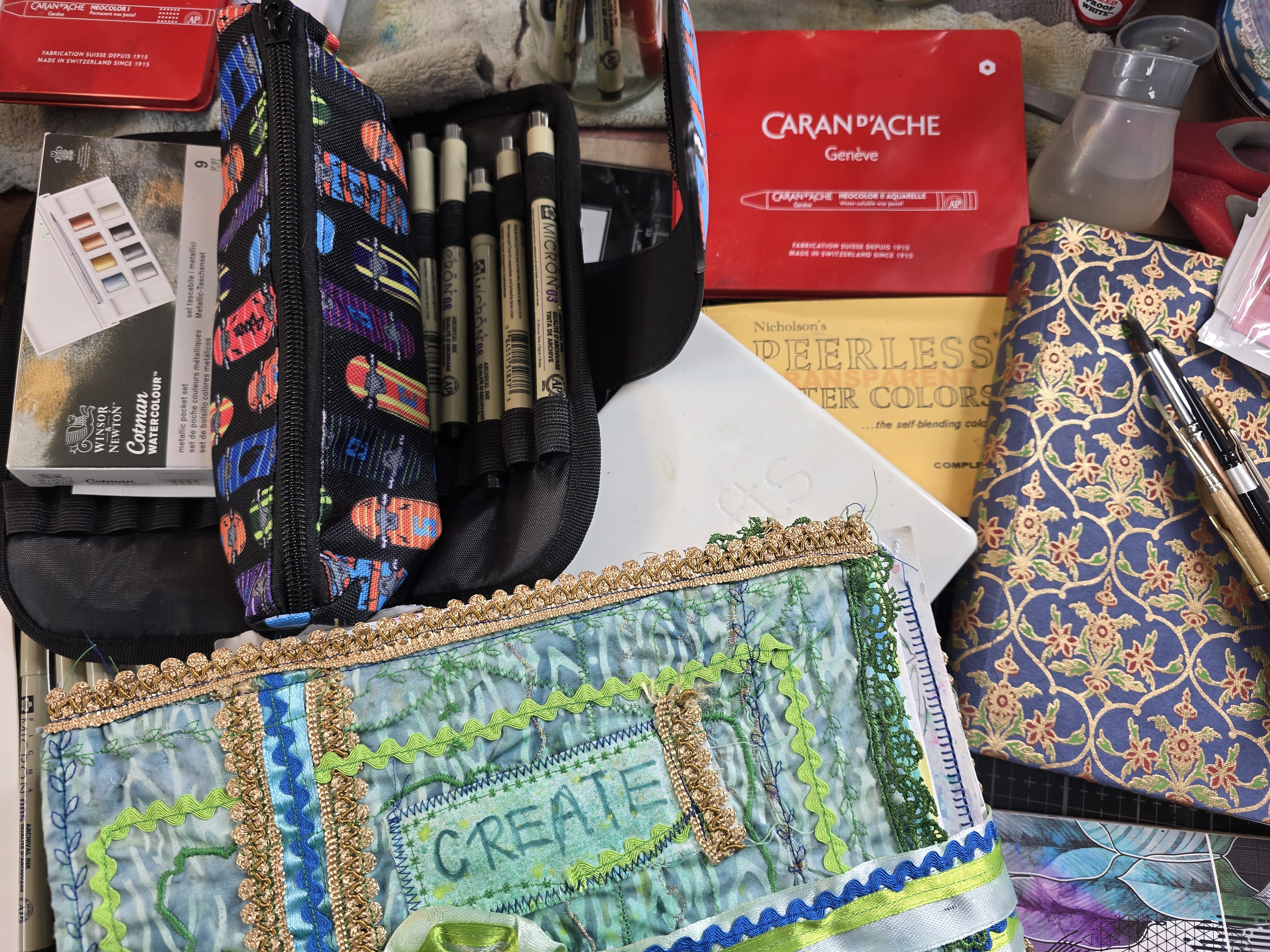
๐ŸŽจ Make These Gorgeous Mixed Media Tags: A Simple & Joyful Creative Project

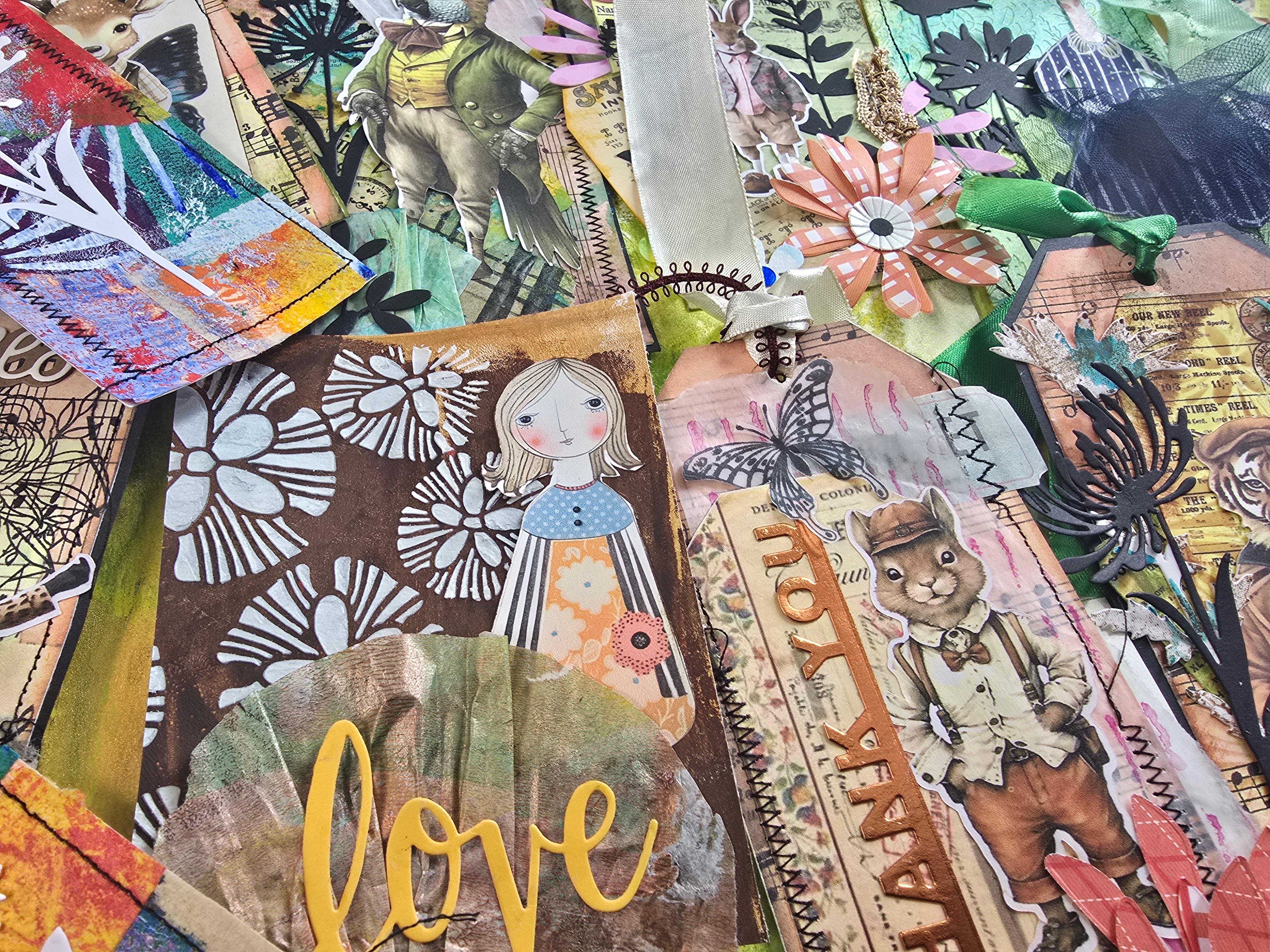
There’s something magical about turning bits and pieces—scraps, textures, old papers—into beautiful little works of art. That’s exactly what we’re doing today with mixed media tags!

Whether you’re new to mixed media or looking for a fun way to use up leftovers from your art table, this project is a joyful, low-pressure way to get creative.

Why Tags?

Tags are small, versatile, and just the right size to experiment without overwhelm. You can tuck them into junk journals, attach them to gifts, use them as bookmarks, or just collect them because they’re pretty!

What You’ll Need:

This is a great stash-busting project. Gather whatever you have on hand, like:

  • Old book pages or scrapbook paper

  • Paints (acrylics, watercolors—anything goes!)

  • Stamps, stencils, washi tape

  • Fabric or lace scraps

  • Glue, scissors, and a hole punch

Let’s Create:

  1. Start with a base – Cut out a tag shape from sturdy paper or recycled packaging.

  2. Layer it up – Add torn paper, paint, stamping, or texture paste. Play with color and shape.

  3. Add details – Think stitching, buttons, or a small quote. The charm is in the little things.

  4. Finish it off – Punch a hole at the top and thread a ribbon or twine through.

The best part? There’s no right or wrong. Each tag becomes its own little story.

Creative Tips:

✨ Try a theme—like vintage, floral, or seasonal.
✨ Use your tags to test new techniques or color combos.
✨ Make a bunch and bundle them as a handmade gift.


Want to see the full process in action?
๐Ÿ‘‰ Watch the video tutorial here!


Final Thoughts:

Mixed media tags are a quick, satisfying creative escape, perfect for those moments when you just want to make something. So pull out your scraps, pour a cup of tea, and let your hands do the magic.

Tag me if you try this—I’d love to see what you create! ๐Ÿ’–

#MixedMedia #CreativeReuse #DIYTags #JunkJournaling #MixedMediaArt #ScrappyCrafts


Sunday, April 6, 2025

I Created Amazing Mixed Media Collage Art with Fodder School 4


I Created Amazing MixMedia Collage Art with Fodder School 4

If you've ever found yourself lost in the joy of layering paper, splashing paint, and creating something from scraps and textures, then you’ll know the thrill I felt diving into my latest mixed-media collage project with Fodder School 4.


Want to see the full process in action?
๐Ÿ‘‰ Watch the video tutorial here!


What is Fodder School?

Fodder School is a year-long, online mixed media art course that brings together inspiring teachers from around the world. Each month, a new instructor shares their process for creating collage fodder and a finished project. Fodder School 4 (this year’s edition) is packed with fresh ideas, techniques, and playful prompts that have been pushing me creatively in all the best ways.

Whether you're new to mixed media or a seasoned artist, there’s something magical about being part of this global community of collage lovers. The best part? There’s no “right” way to do it—just endless opportunities to experiment and explore.

My Creative Process

For this particular project, I started by making my own collage fodder:

  • painted papers

  • stamped textures

  • vintage book pages

  • tissue paper layers

  • scraps from past projects

I loved mixing up materials—some handmade, some found—to create a truly personal collection of collage elements. There’s something so satisfying about turning leftover bits into something beautiful and cohesive.

Once I had my pile of fodder ready, I moved on to creating a layered background using acrylics and gesso. I followed the lead of the month’s Fodder School teacher, adapting their techniques in my own way. I played with color, placement, and texture—trusting the process and letting the piece evolve organically.

What I Learned

One of the biggest lessons I’ve learned from Fodder School is that there’s beauty in imperfection. It’s easy to get caught up in trying to make everything look "right," but collage is all about happy accidents and letting the materials guide you.

Fodder School 4 has also taught me to slow down and really enjoy the making—every tear, every brushstroke, every decision feels like an act of creativity.

Final Thoughts

Creating this mixed media collage has been such a joyful experience. It reminded me why I love this kind of art: it’s expressive, intuitive, and deeply satisfying. If you're curious about mixed media or looking for a community to grow your creative practice, I highly recommend checking out Fodder School.

Are you part of Fodder School too? Have you tried your hand at mixed media collage? I’d love to hear your thoughts in the comments!

Until next time—keep creating, keep exploring, and don’t be afraid to make a beautiful mess. ๐ŸŽจ